

If there was ever an Australian suburb where having a bar in your home felt appropriate, it's Bondi Beach. And here, at this five-storey house designed by Sydney interiors studio Handelsmann + Khaw, the bar is quite literally the tip of the Bondi iceberg, situated at the top of the building and overlooking the booming waves of Australia's most renowned beach.
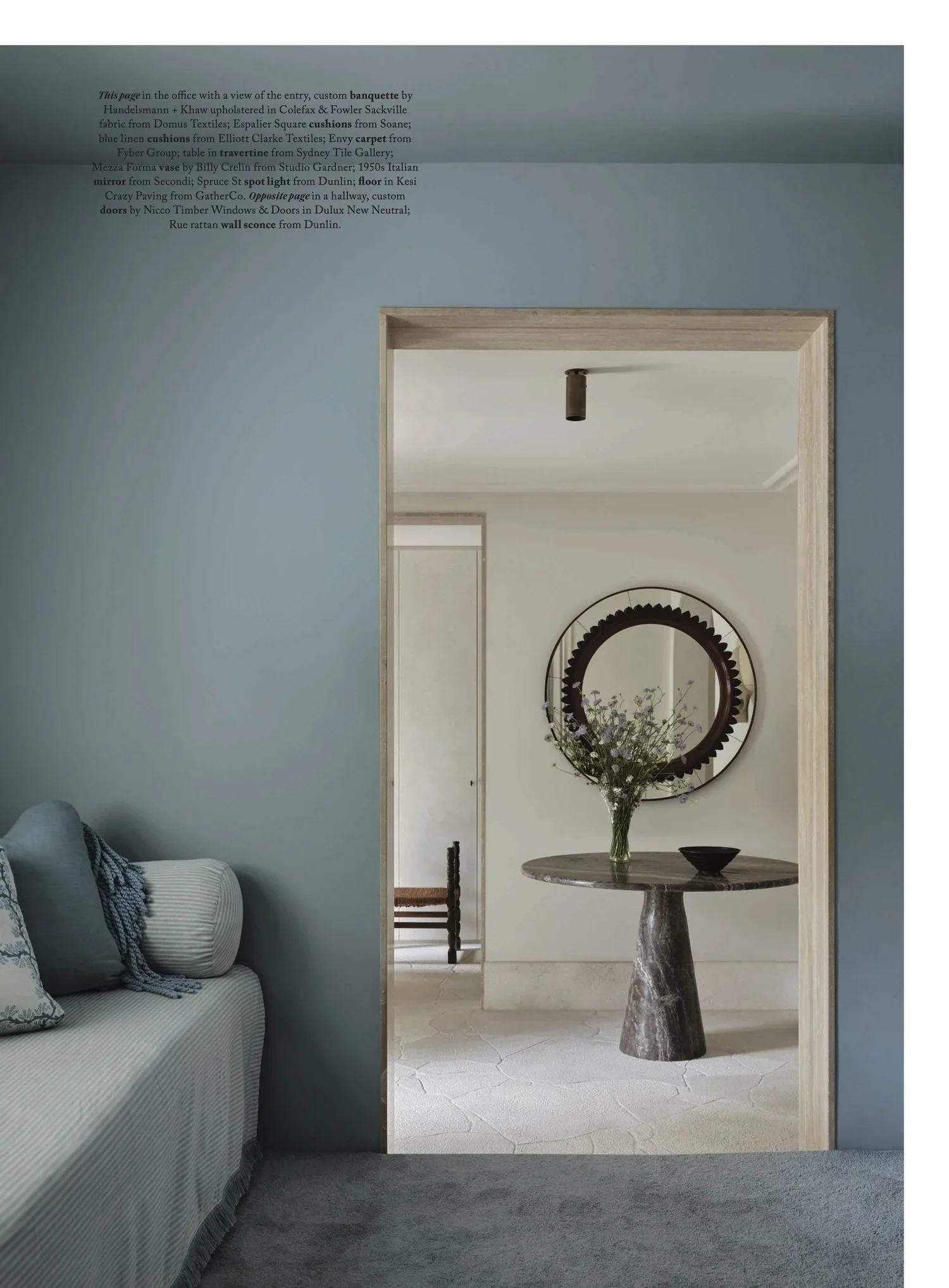
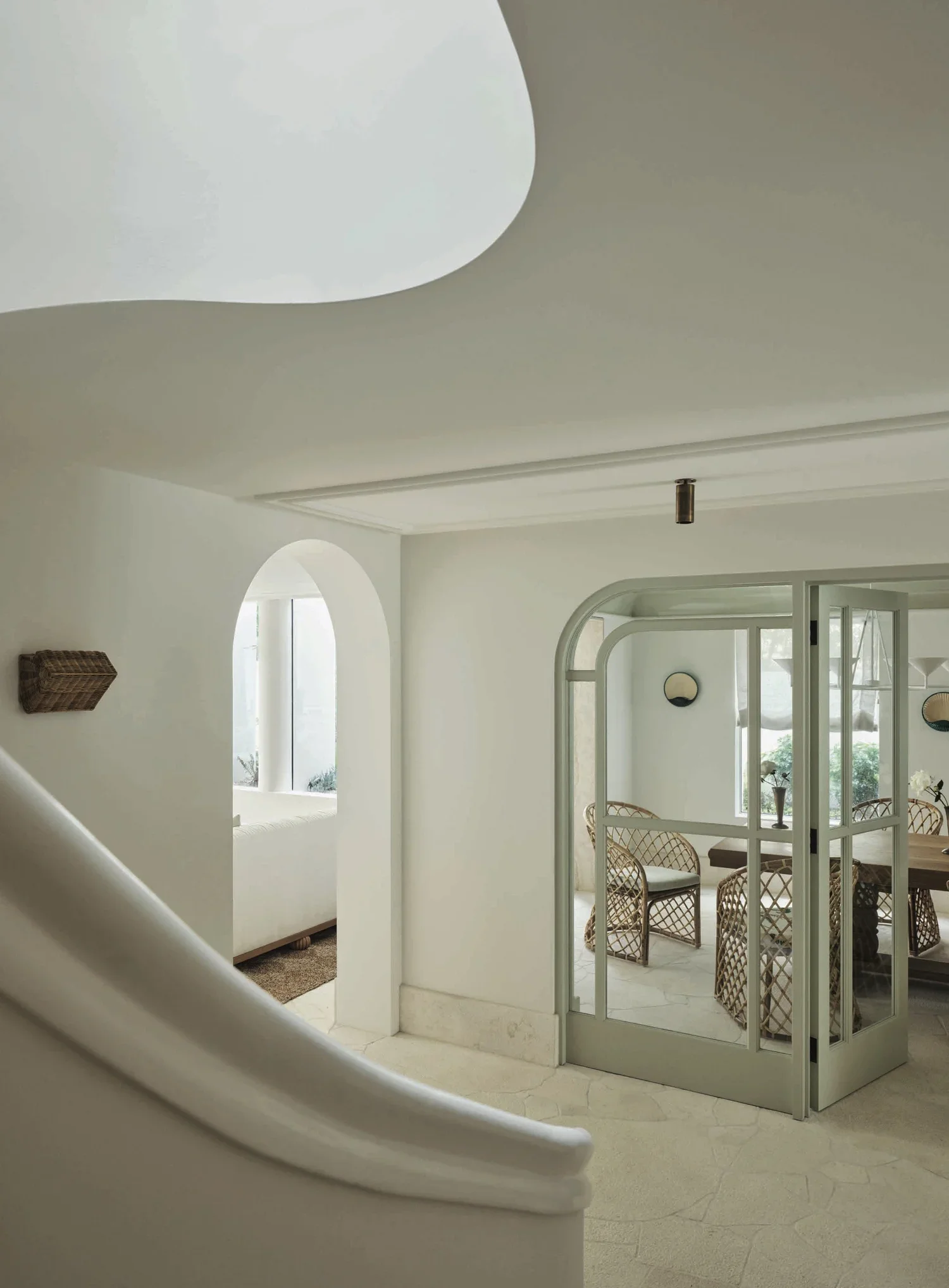
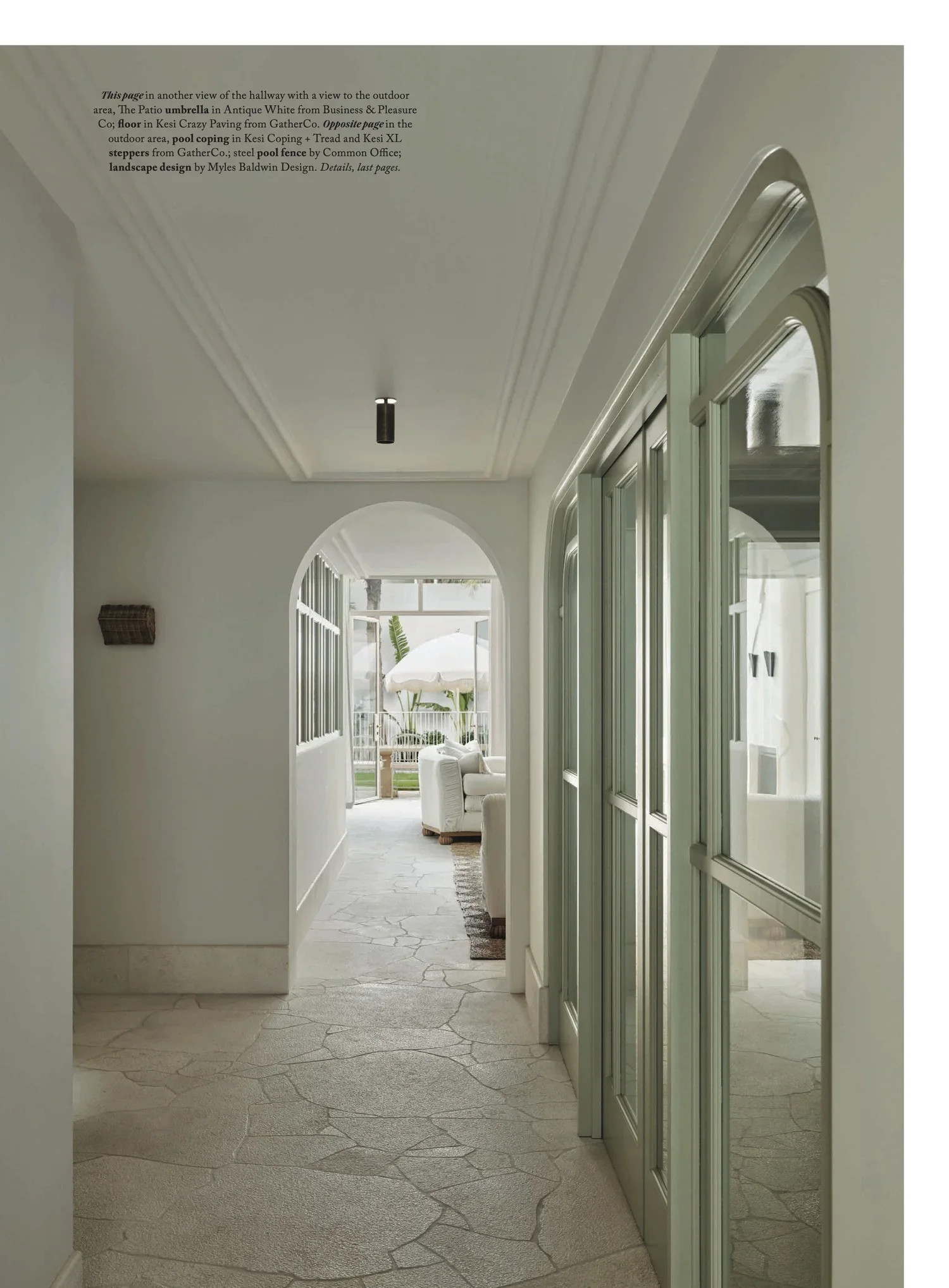
Skinned with cloistral archways and spanning 535 square metres, venturing through Bondi Beach Villa leads you to numerous living areas, one office, five bedrooms and six bathrooms. In the basement there's a gym, sauna and cold plunge. It's a journey, with the team at Handelsmann + Khaw starting the story at the front door and completing it in the attic bar. "Because of the way the house is planned, the interiors naturally shift as you move through it, and we leaned into that," says Tania Handelsmann, who worked on the design with her interior designers, Ursula Król and Brooke Tilston. "The social spaces are open and robust: they can handle people, entertaining, coming and going. As you move upstairs, things become softer and more enclosed. There's more fabric, warmer finishes, and more intimate moments. Then, at the very top, the bar is almost a release."
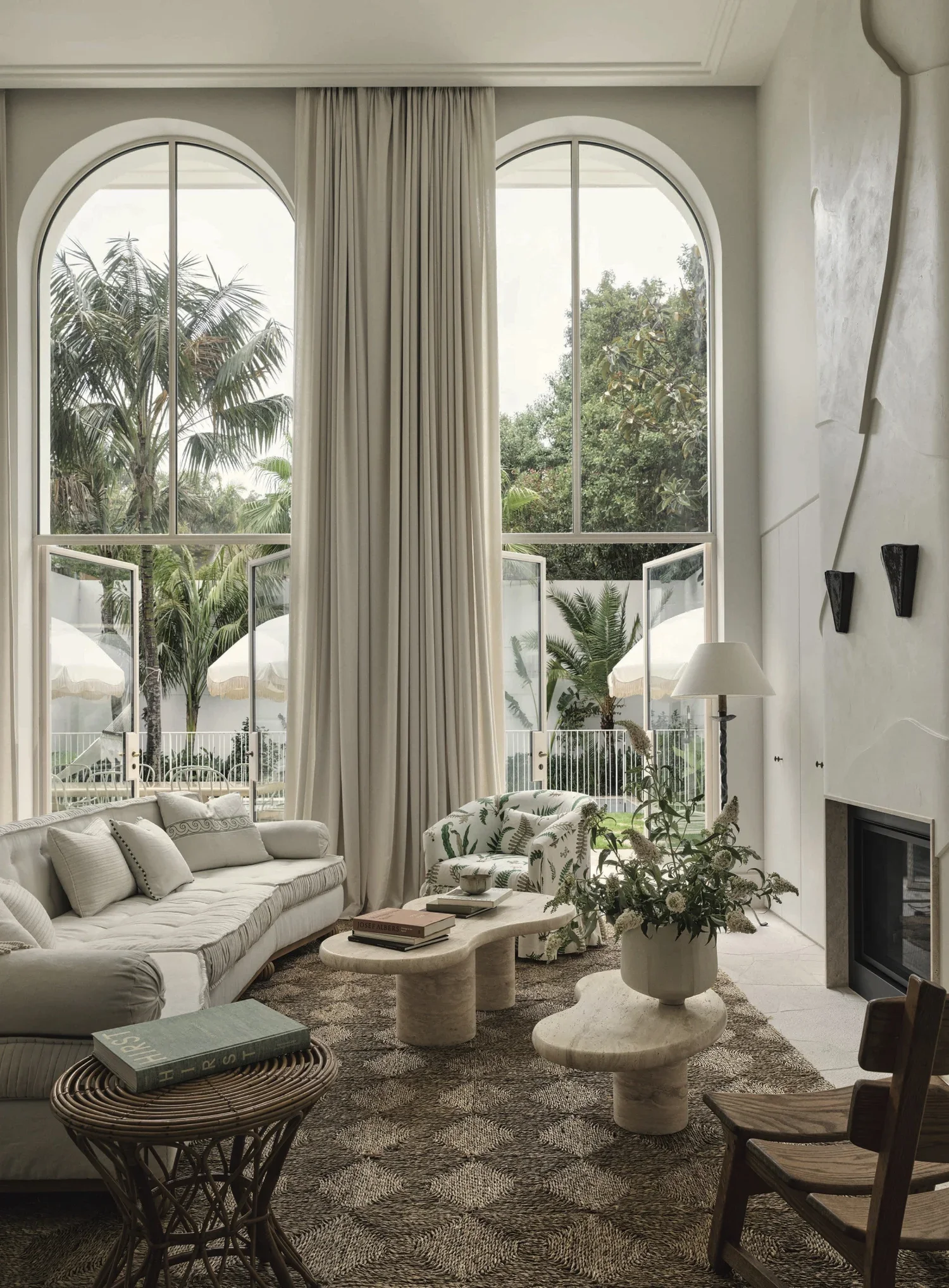
The immediate aesthetic is not one which screams "Beach!" at you, like so many waterside houses do. "The palette is mostly muted. There's nothing literal or beachy. It's more atmospheric; colors that feel sun-washed rather than applied," says Handelsmann. There is the sense of relaxed ageing — the idea of driftwood, rather than a slab of it on the wall. "Everything feels slightly softened, like it's been there a while."
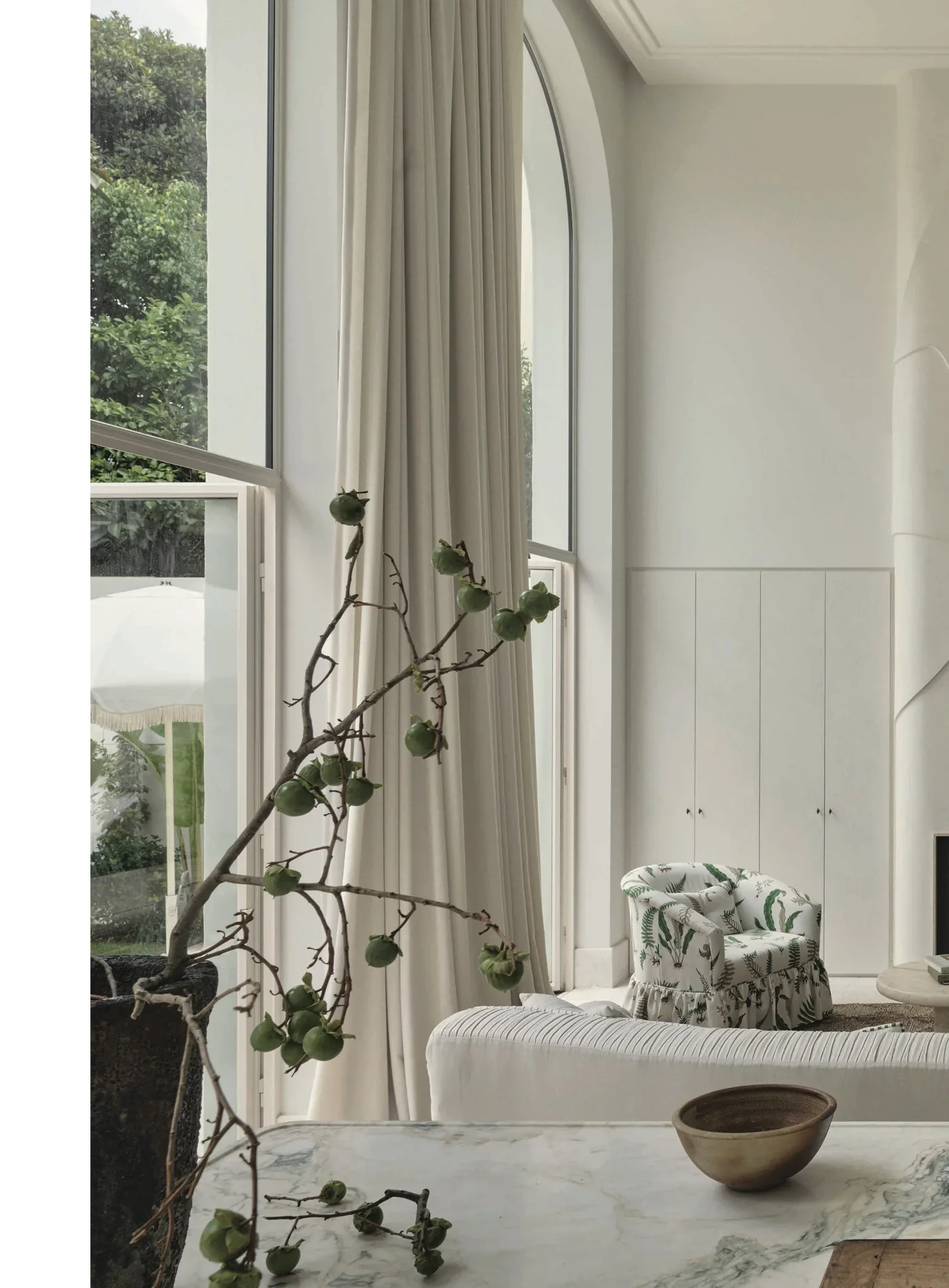
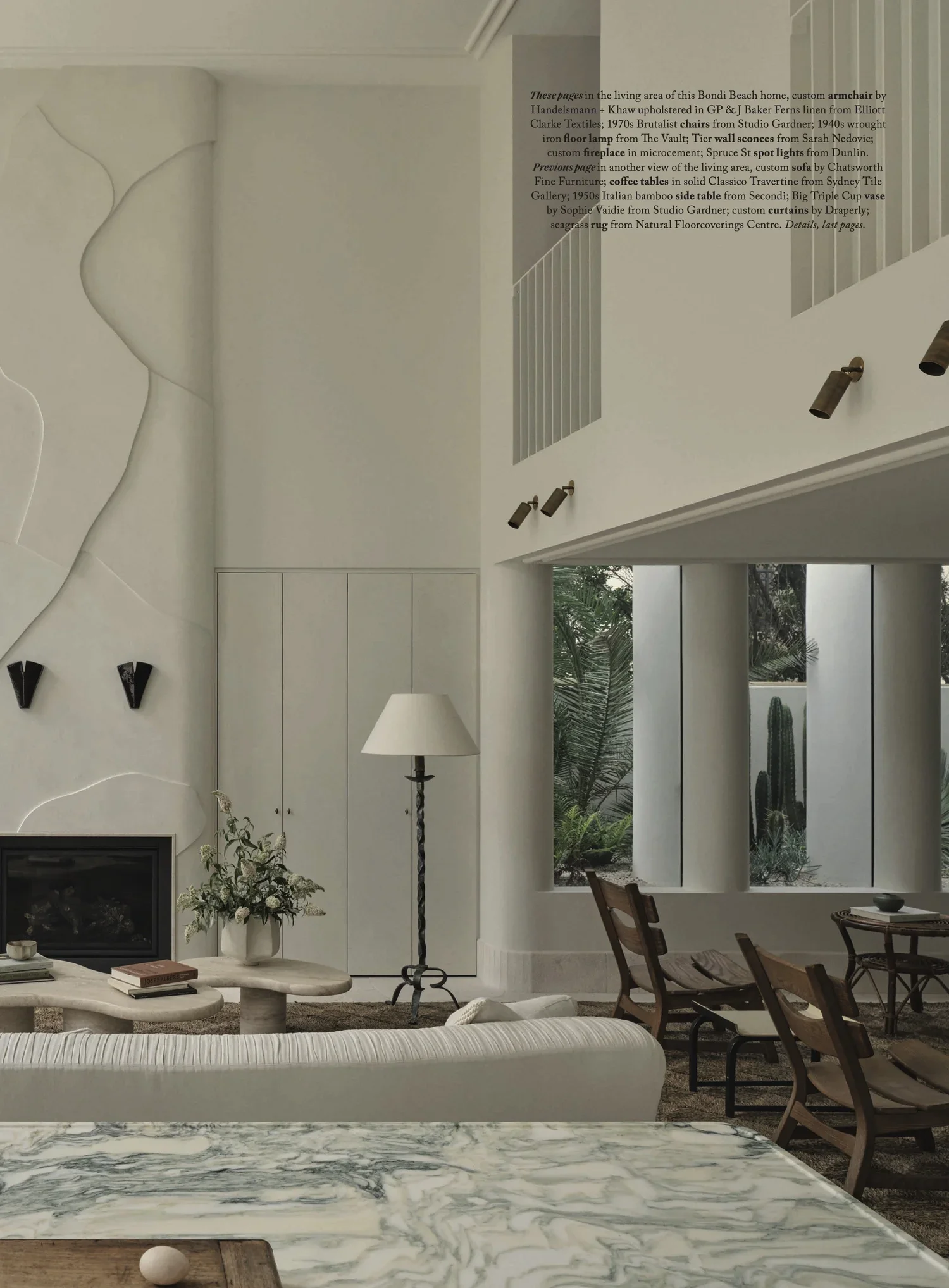
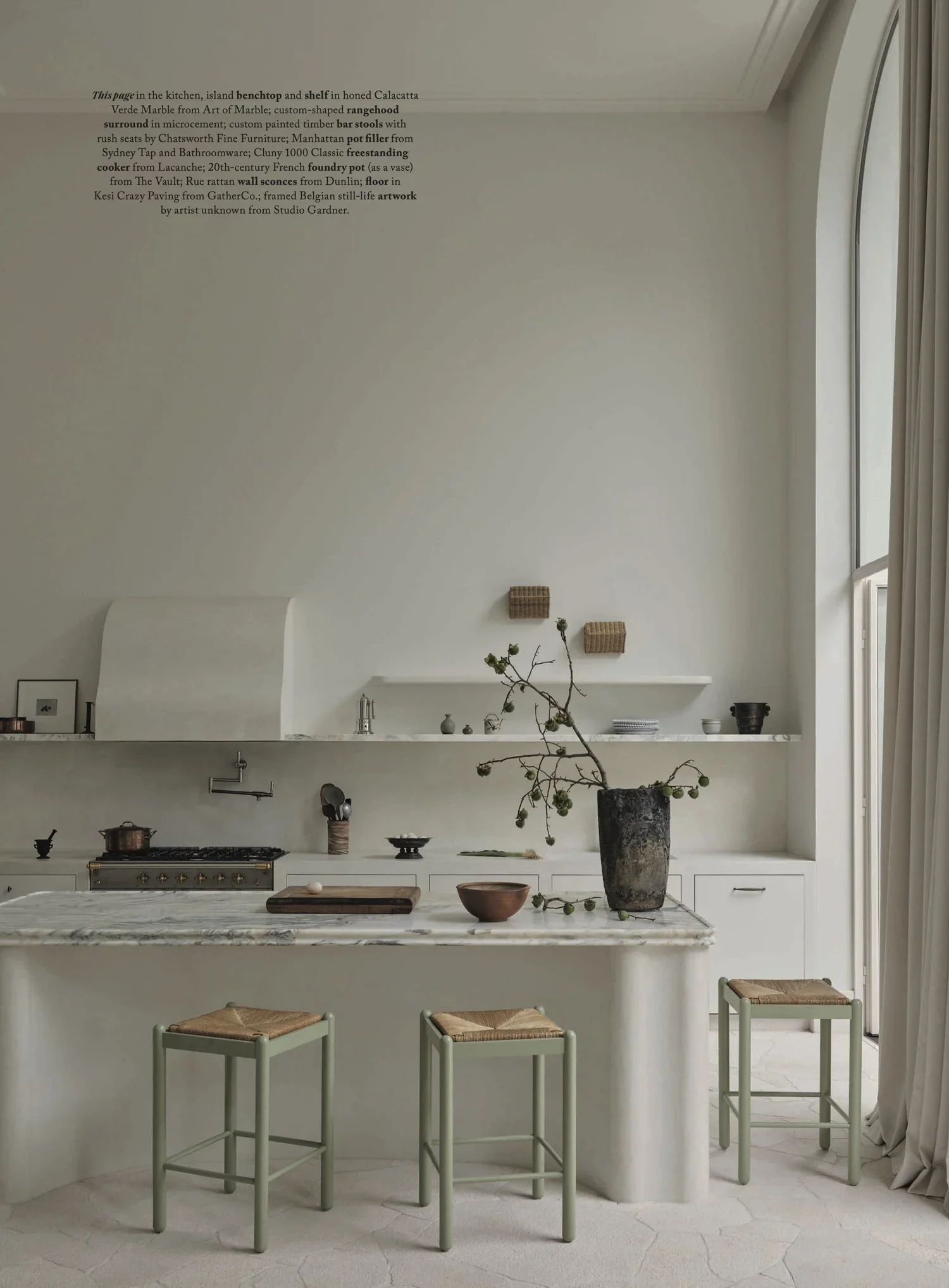
Warmth is created not only with colours, but with materials. The faint texture of exposed plaster adorns the rangehood in the kitchen, in the bathrooms, and is made sculptural on the fireplace, the daylight which dapples onto it recalling the whooshes and pressure of the plasterer's trowel. "The use of plaster contributes significantly to the home's tactile quality," notes Handelsmann. "It helps the interiors feel lived-in, calm and cohesive, rather than overly polished or precious."
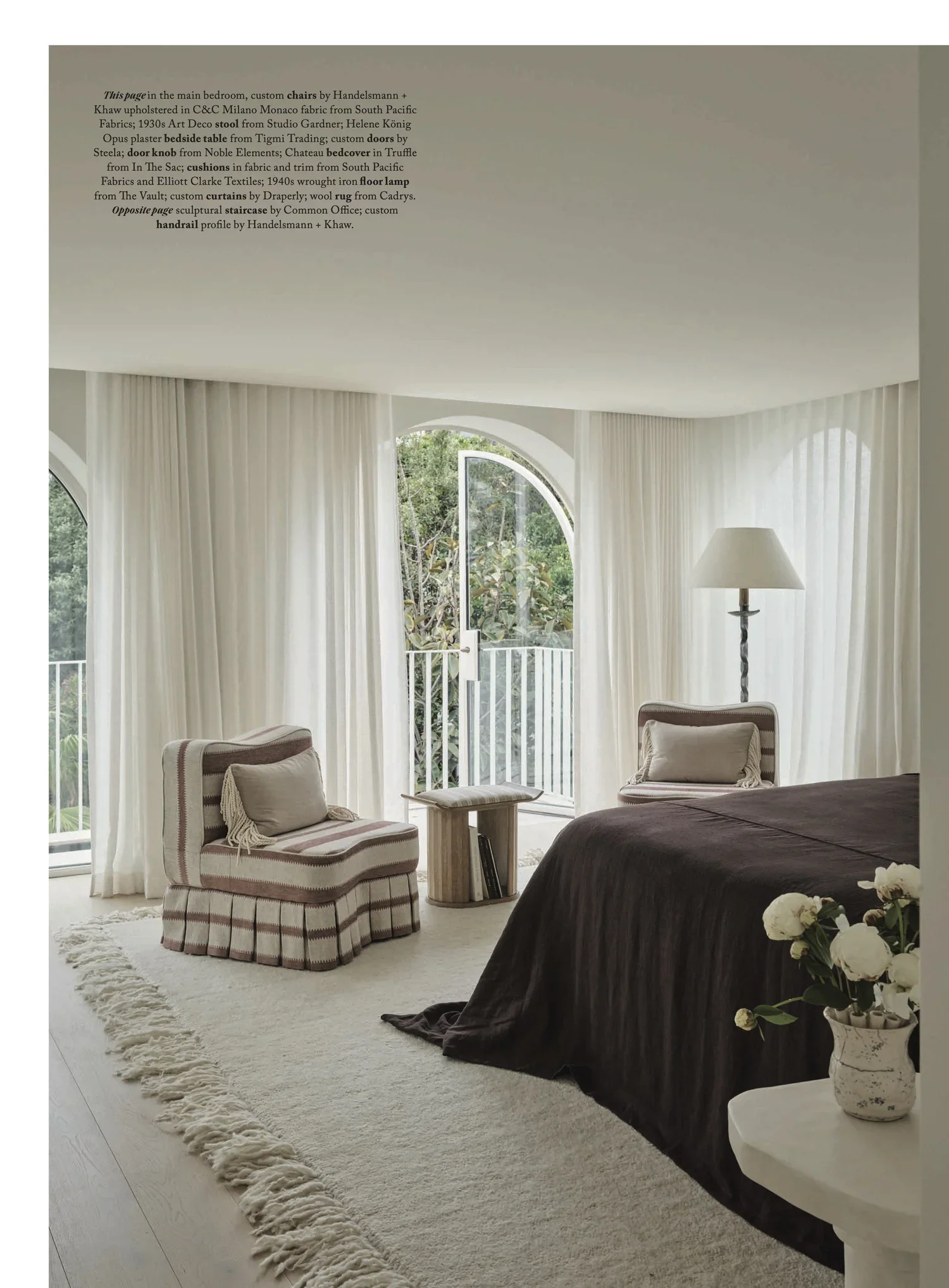
Much of this house leans into pristine, plush tactility, but Handelsmann + Khaw found a way to counteract this with inclusions that seem to recall an imagined home of the past, nestling the spaces into deep, cushy comfort. One such feature is the valance, which pops up beneath vanities, stools and chairs. Yes, it's back. "There's an obvious 1980s reference, but I'm not thinking about that in a literal or nostalgic way," explains Handelsmann.
"It's more about that era's confidence: things didn't apologise for being decorative. It's a little romantic, a little humorous. Not everything needs to be so serious or perfectly resolved. And from a practical perspective, fabric softens hard forms, hides the functional stuff, and makes a space feel more layered and lived-in. Sometimes a space just needs a bit of swish."
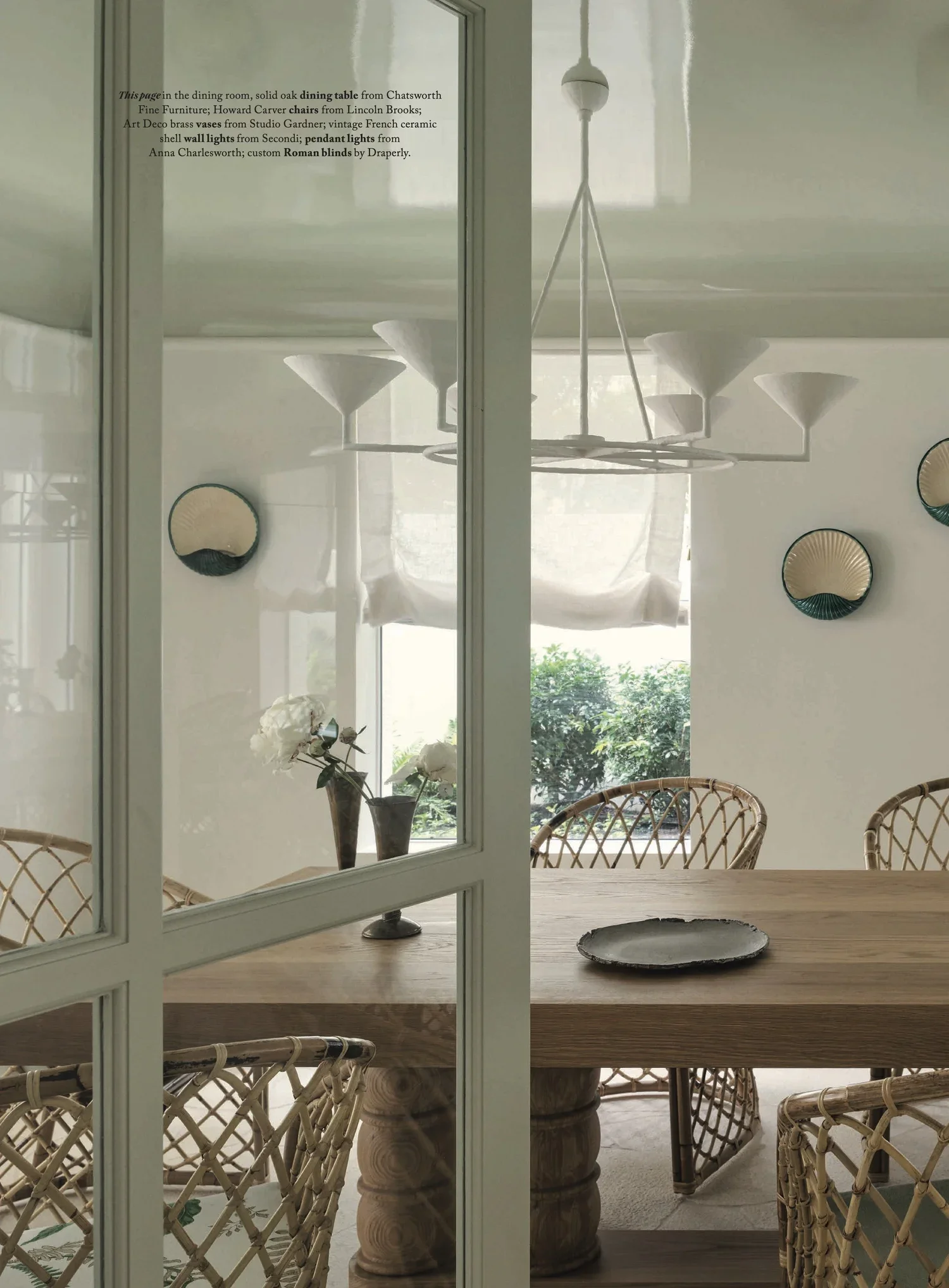
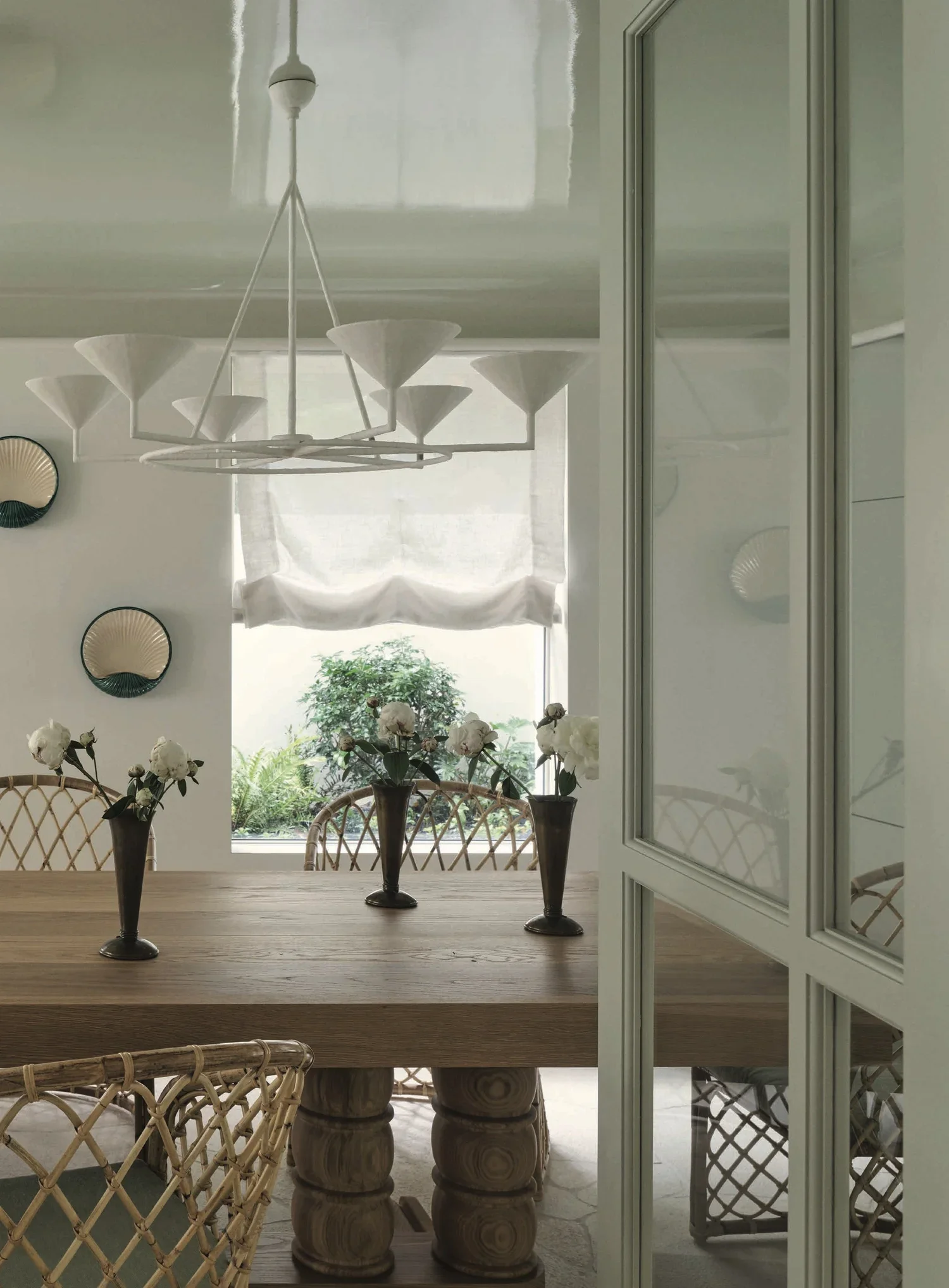
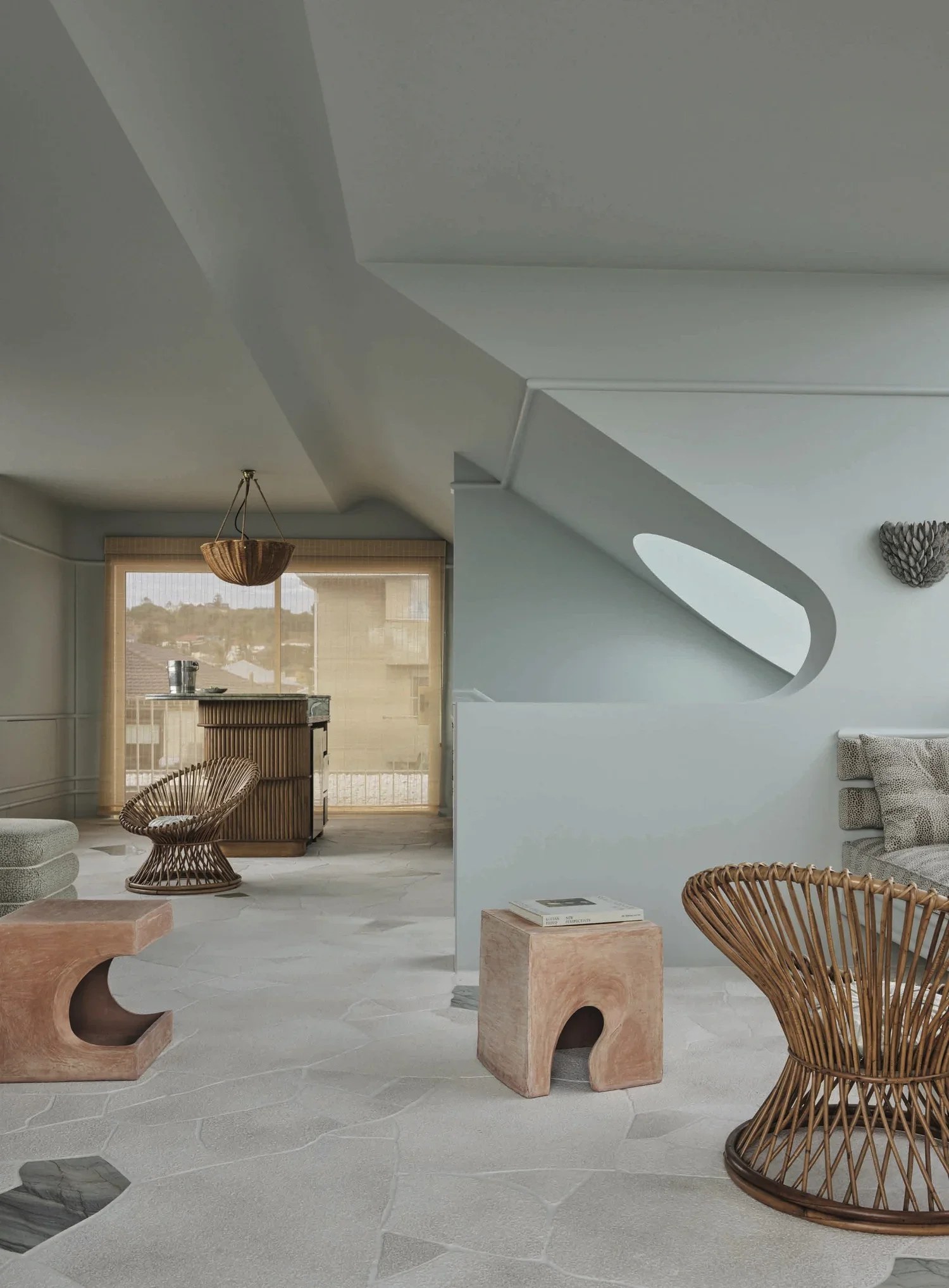
Homely materials beloved in the 1970s and 1980s, such as rattan and rush, appear throughout Bondi Beach Villa. "The vintage rattan lounge chairs in the bar and the rattan tables in the living room bring a sense of lightness and informality that's really important to the house," asserts Handelsmann. "Rattan feels inherently relaxed and a little nostalgic, which suits the coastal context without tipping into anything overtly beachy. It softens the architecture and all the more solid, weighty elements — like the stone floors, plaster walls and timber joinery - with something porous and breathable."
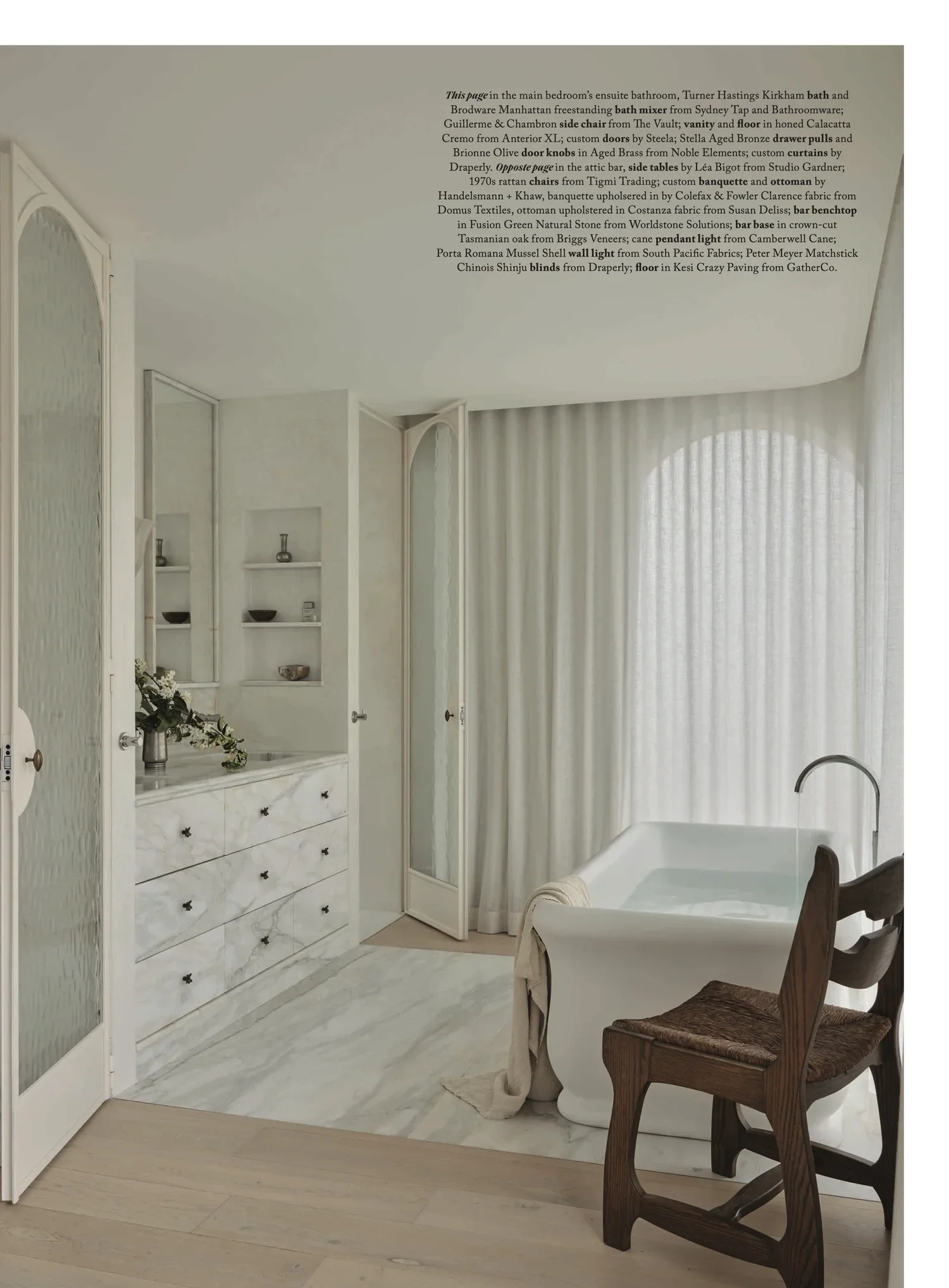
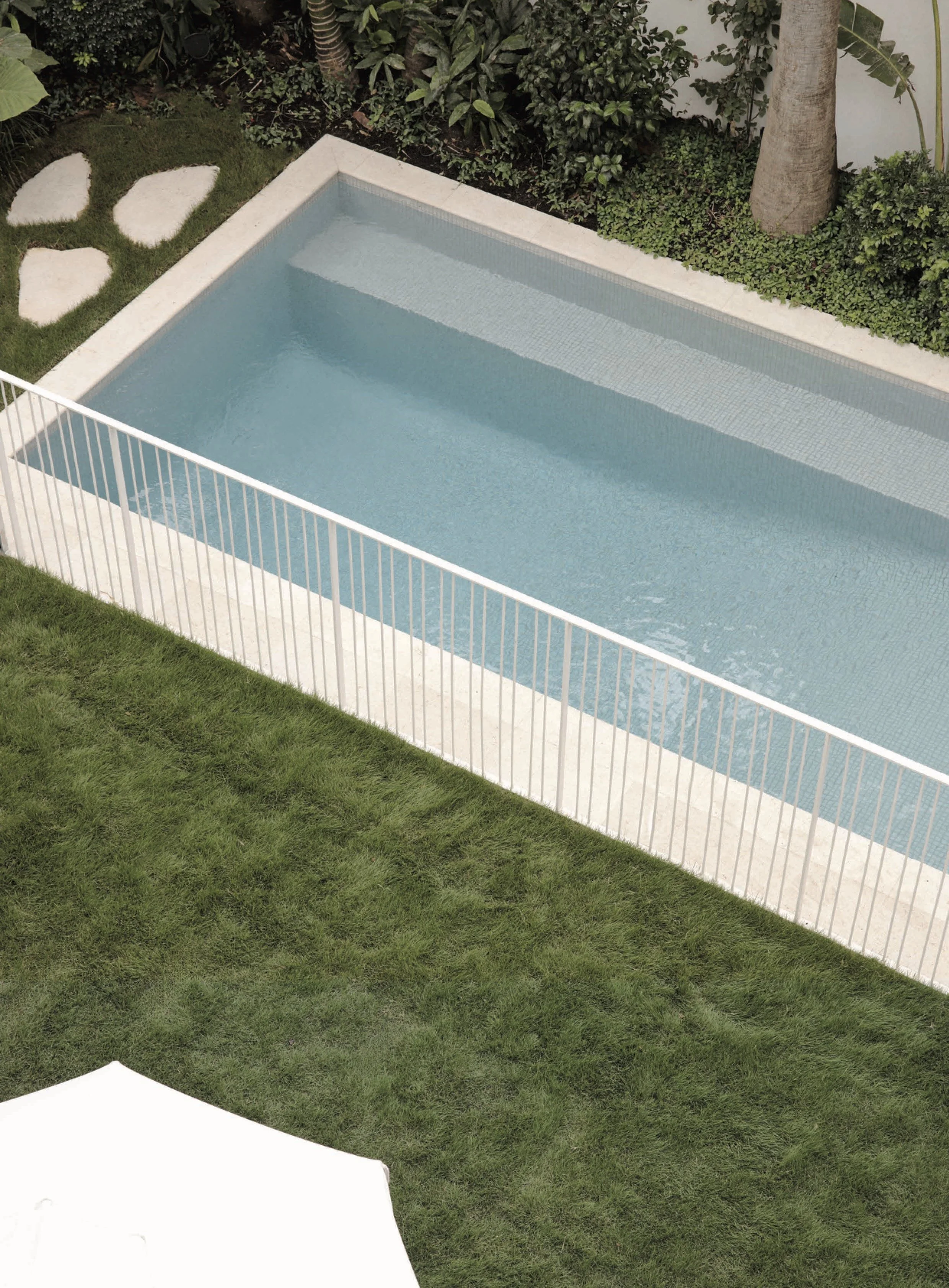
But that's not to say that the gravitas of Bondi Beach Villa's robust elements aren't a source of great visual pleasure. The marble on the kitchen island, bullnose-edged and rhythmic in its stormy veining, is key to the entire room's grand, double-height design, accentuating the rippling water in the pool beyond the tall, arched windows. "The marble is one of the few sources of colour in an otherwise restrained palette," states Handelsmann. "Its soft, pale-green veining brings a gentle warmth and visual interest to the space and subtly echoes the green frames of the bar stools." Marble takes the dweller on a journey with it through the house. "In the primary ensuite, the marble feels calmer and more immersive, enhancing the sense of retreat," she says, "While at the bar it becomes more expressive again."
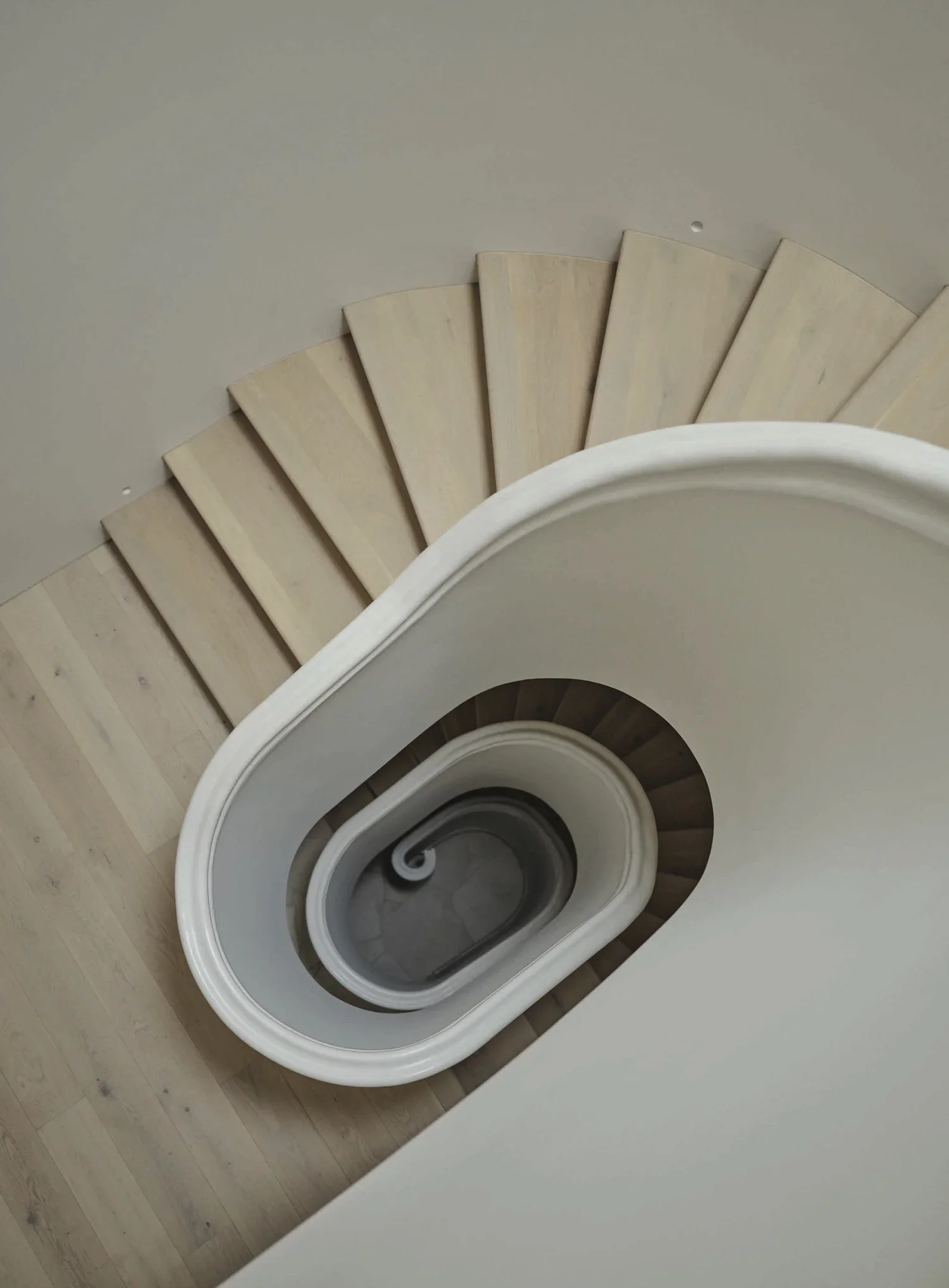
The attic bar has a dream-like quality, like being inside a cloud. There is an elevator, but if you choose to walk, you are taken there via a skylit stairway that looks like the swirls of soft-serve ice-cream, up into a space with mismatched crazy paving tiled floors and windows that hint at the nautical. Léa Bigot's dusky clay sculptures double as modular side tables, and Porta Romana's Clam Shell wall lights and Mussel Shell uplighters float upon panelled walls like a fever dream. It is a pastel enclosure, bedecking the Bondi scene below. "It's not a space you pass through every day. It's more of a destination," remarks Handelsmann. "It felt like a moment where we could push the interiors a bit further and let it have its own personality; where the house could open up again, physically and emotionally.”